
If you have just been diagnosed with a thyroid problem, the food advice online can feel like a maze. One site says avoid soy. Another says cut out gluten. A third tells you to eat seaweed every day. No wonder so many people search for a simple thyroid diet chart PDF they can print and follow.
A good chart takes the guessing out of daily meals, but it also has to be honest about what food can and cannot do. Here is what the research says, which foods fit each condition, and how to build a plan you can use this week.
Medical disclaimer: This article is for general education only and is not medical advice. Thyroid conditions need proper diagnosis and treatment from a doctor. Never change or stop your medication because of something you read online, and talk to your healthcare provider or a registered dietitian before making major diet changes.
In a rush? Download thyroid diet chart PDF here:
Key Takeaways
- Diet supports thyroid treatment. It does not replace medication.
- Hypothyroidism and hyperthyroidism need different food approaches.
- Most “banned” foods are fine in normal portions.
Is There Really a “Thyroid Diet”?
Here is the honest answer: not in the way social media describes it. A review of diet in thyroid disorders, which included a survey of clinicians, points out that there is no single scientific concept called a “thyroid diet.” The same paper notes that gluten-free eating is not recommended for typical hypothyroid patients unless celiac disease is also present, and that cutting dairy has no proven benefit unless you are lactose intolerant. You can read the full discussion in this review of diet in thyroid disorders on PubMed Central.
That does not mean food is irrelevant. Your thyroid needs certain nutrients to make hormones, and meals can ease symptoms like fatigue and weight changes. A dietitian’s guide to thyroid care, written for health professionals, includes sample food plans, low-iodine diet guidelines, and a list of goitrogens in its appendices. It treats nutrition as a partner to medical care. You can browse it through this nutrition management of thyroid disease guide.
The goal of a thyroid diet chart, then, is not to cure anything. If you are wondering whether food alone can fix the problem, this breakdown of how to cure thyroid problems explains why treatment and lifestyle work together.
Who Needs a Thyroid Diet Chart?
A chart is useful for several groups of people:
- People with hypothyroidism or Hashimoto’s disease, where the gland makes too little hormone.
- People with hyperthyroidism or Graves’ disease, where the gland makes too much.
- Women in midlife, when symptoms overlap. If that sounds like you, read about menopause and an underactive thyroid to see how the two interact.
Want it done for you? Instead of building a chart from scratch, you can grab a ready-made thyroid diet plan PDF with weekly menus, grocery lists, and printable trackers.
The Core Nutrients Your Thyroid Needs
Think of these as the foundation of any thyroid diet chart.
Iodine is a building block of thyroid hormones. Too little can cause hypothyroidism and goiter. Too much can trigger or worsen hyperthyroidism and, in some people, autoimmune problems. Iodized salt, fish, eggs, and dairy are common sources.
Selenium helps convert and protect thyroid hormones. Brazil nuts, tuna, sardines, eggs, and sunflower seeds are good sources. One or two Brazil nuts a day is usually plenty, since selenium in high doses can be harmful.
Zinc and iron support hormone production and energy. Pumpkin seeds, chickpeas, lentils, spinach, and lean meat provide them, but iron supplements can interfere with thyroid medication, so space them apart.
Vitamin D is often low in people with thyroid disease. Sunlight, oily fish, and fortified foods help. For more detail, see how vitamin D and low thyroid are connected.
Protein keeps muscle steady and helps you feel full, so include a source at every meal.
Thyroid Diet Chart for Hypothyroidism
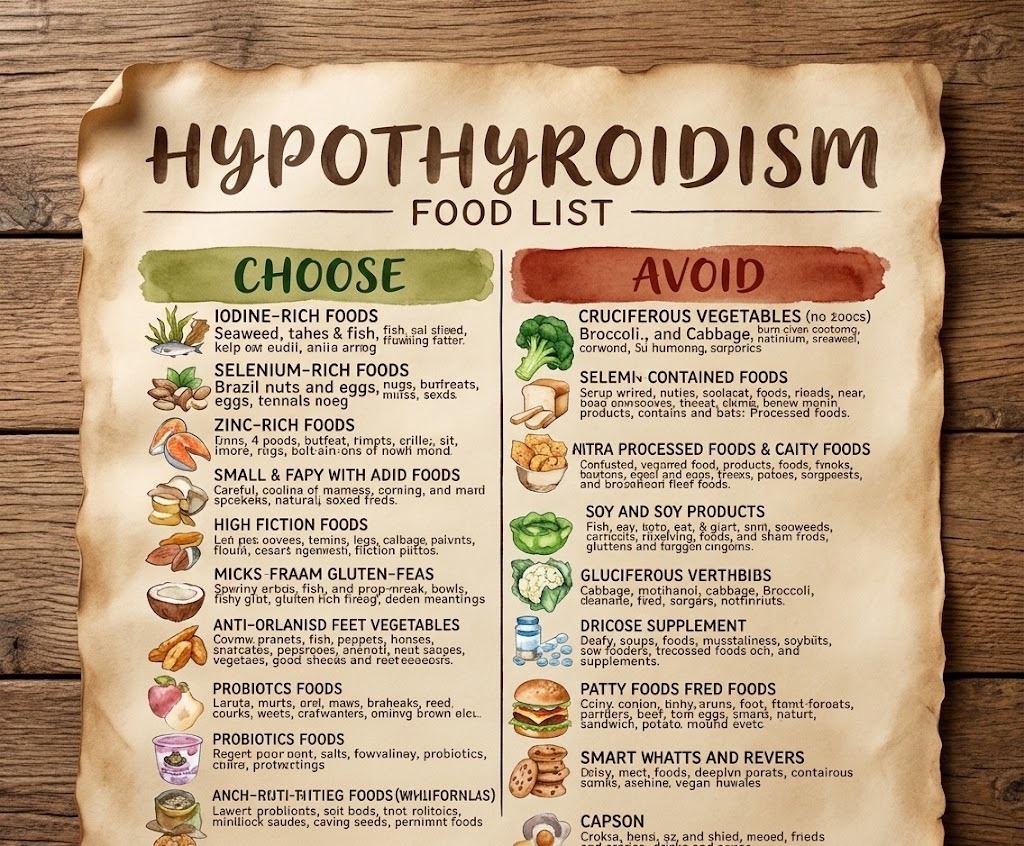
Hypothyroidism slows metabolism, so the focus is on nutrient-dense, high-fiber meals. A research paper on hypothyroidism diet planning describes diet as a supporting treatment, with attention to reducing excess calories and managing the metabolic problems that come with the condition. You can see the overview in this hypothyroidism diet plan paper on ResearchGate.
| Food Group | Eat Regularly | Limit or Time Carefully |
|---|---|---|
| Protein | Eggs, fish, chicken, turkey, lentils, beans | Highly processed meats |
| Vegetables | Spinach, carrots, tomatoes, zucchini, cooked broccoli or cabbage | Very large raw portions of cruciferous vegetables |
| Fruits | Berries, oranges, apples, bananas, papaya | Fruit juice in large amounts |
| Grains | Oats, brown rice, quinoa, whole wheat | Refined white bread, sugary cereals |
| Healthy fats | Olive oil, avocado, nuts, seeds | Deep-fried foods |
| Dairy | Plain yogurt, milk, cheese in normal portions | Take calcium-fortified items away from medication |
| Drinks | Water, herbal tea, green tea | Excess coffee, alcohol, sugary drinks |
If you want a printable version with portions and a weekly rotation, this hypothyroidism diet plan PDF is a good place to start.
Medication timing for hypothyroidism
Levothyroxine is usually taken on an empty stomach with water, about 30 to 60 minutes before breakfast. Coffee, calcium, iron, and high-fiber meals can reduce absorption, so follow your prescriber’s exact instructions.
Thyroid Diet Chart for Hyperthyroidism
Hyperthyroidism speeds up metabolism, so the focus shifts to enough calories and protein, calcium and vitamin D for bone health, and care with iodine.
| Food Group | Eat Regularly | Limit or Avoid |
|---|---|---|
| Protein | Chicken, lentils, beans, tofu, eggs in moderation | Very salty processed meats |
| Vegetables | Broccoli, cauliflower, kale, cabbage, carrots | Seaweed, kelp, nori in large amounts |
| Fruits | Berries, apples, oranges, melon | Dried fruit mixes with added iodine-rich ingredients |
| Grains | Brown rice, oats, whole grain bread | Highly refined snacks |
| Calcium and bone support | Fortified plant milk, leafy greens, sesame, yogurt | Calcium doses without medical advice |
| Drinks | Water, decaf tea, herbal tea | Heavy caffeine, energy drinks, alcohol |
Bone health deserves attention because an overactive thyroid can weaken bones over time. Learn more about vitamin D and hyperthyroidism to see why this nutrient often comes up in treatment plans.
Save time with a done-for-you plan. If planning every meal feels exhausting, a printable thyroid meal plan gives you the structure without the daily decision-making.
A Simple 7-Day Thyroid Diet Chart Example
Use this as a pattern and swap in foods you enjoy. It leans hypothyroid-friendly, so hyperthyroid readers should adjust iodine-rich items with their doctor.
| Day | Breakfast | Lunch | Dinner |
|---|---|---|---|
| Mon | Oats, berries, pumpkin seeds | Chicken salad, olive oil | Baked fish, vegetables, brown rice |
| Tue | Two boiled eggs, whole grain toast | Lentil soup, side salad | Turkey stir-fry, quinoa |
| Wed | Yogurt, banana, walnuts | Chickpea and cucumber bowl | Salmon, sweet potato, green beans |
| Thu | Vegetable omelet, avocado | Rice, beans, spinach | Chicken curry, cauliflower rice |
| Fri | Spinach and berry smoothie | Tuna wrap, whole wheat | Lean beef, roasted carrots |
| Sat | Chia pudding, papaya | Quinoa vegetable salad | Baked cod, asparagus |
| Sun | Whole grain pancakes, berries | Bean and vegetable stew | Roast chicken, greens, rice |
Snacks can include an apple with peanut butter, a handful of nuts, or a small bowl of yogurt. Drink water through the day.
Foods That Deserve a Second Look
Goitrogens. These natural compounds in cabbage, broccoli, kale, and soy can interfere with iodine use in very large raw amounts. Cooking reduces the effect, and normal portions are generally safe.
Soy. It can affect medication absorption, so keep a few hours between soy and your pill.
Gluten. Cut it only if you have celiac disease or a confirmed sensitivity.
Kelp and iodine supplements. These are the real danger zone. Large iodine doses can push the thyroid in the wrong direction, so skip them unless a doctor says otherwise.
Special Situations
Pregnancy. Thyroid hormone needs rise, and both low and high levels can affect the baby. Diet, prenatal vitamins, and regular lab checks all play a role. See this guide on how to control thyroid during pregnancy.
Hair loss. Shedding is common when thyroid levels are off. Enough protein, iron, zinc, and vitamin D can support regrowth once hormones are balanced. Here is more on thyroid disorder and hair loss.
Thyroid nodules. Diet cannot dissolve nodules, but eating a balanced, iodine-adequate diet is a sensible baseline. If you are curious about non-surgical approaches, read about how to remove thyroid nodules without surgery.
How to Use Your Thyroid Diet Chart
- Start with your diagnosis. Pick the hypothyroid or hyperthyroid column.
- Build the plate. Half vegetables, a quarter protein, a quarter whole grains, plus a little healthy fat.
- Fix the timing. Take medication as directed, then plan breakfast around it.
- Track and recheck. Note energy and digestion weekly, and let blood tests guide any treatment changes.
Need a head start? Download a thyroid-friendly meal planner that combines the chart, shopping lists, and weekly tracker in one clean PDF.
Frequently Asked Questions
What is the best diet for thyroid patients?
There is no single best diet, because the right choice depends on whether your thyroid is underactive or overactive. For most people, a Mediterranean-style pattern works well. It centers on vegetables, fruit, whole grains, legumes, fish, olive oil, and nuts. Your doctor or dietitian can fine-tune it for your condition.
What are 5 foods to avoid for thyroid?
Most are fine in moderation, but these five deserve caution: (1) kelp and iodine supplements, especially with hyperthyroidism; (2) large raw portions of cruciferous vegetables, especially with hypothyroidism; (3) soy products taken close to medication; (4) highly processed and fried foods; and (5) excess alcohol and sugary drinks. Gluten only needs to go if you have celiac disease.
Which morning drink is good for the thyroid?
Start with plain water and take your medication as directed. After the waiting period, good choices include herbal tea such as ginger or chamomile, green tea in moderation, or a smoothie with berries, spinach, and yogurt. Coffee is fine for most people, but wait 30 to 60 minutes after levothyroxine so it does not interfere with absorption.
Can I eat eggs if I have hyperthyroidism?
Yes, in moderation. Eggs provide protein, selenium, and vitamin B12, but the yolk contains some iodine, so skip huge amounts. One or two a day is a common range. Follow your doctor’s guidance, especially if you are preparing for radioactive iodine treatment with a low-iodine diet.
Can I eat cucumber with hyperthyroidism?
Yes. Cucumber is low in iodine, hydrating, and low in calories. It is a safe and refreshing addition to salads and snacks. Just watch pickled or seasoned versions, which may include iodized salt.
Are boiled eggs beneficial for the thyroid?
Boiled eggs are a convenient way to get protein, selenium, and some iodine without added oil. That makes them a good fit for hypothyroidism, and an easy grab-and-go breakfast or snack. Keep portions sensible.
What is the best breakfast for thyroid patients?
A balanced breakfast with protein, fiber, and healthy fat works best. Good examples are oats with berries and pumpkin seeds, two boiled eggs with whole grain toast and tomato, or plain yogurt with fruit and walnuts. Take thyroid medication first, wait the recommended time, and then eat.
Can I drink milk if I have hyperthyroidism?
Usually yes, in normal amounts. Milk provides calcium and vitamin D support, which help protect bones that overactive thyroids can weaken. It does contain iodine, so people who have been told to follow a strict low-iodine diet should check their doctor’s food list first. If you take thyroid medication, keep calcium-rich foods and supplements a few hours away from the pill.
Final Thoughts
A thyroid diet chart works best when it is simple and matched to your diagnosis. Focus on whole foods, get enough iodine and selenium without overdoing either, time your medication well, and ignore extreme rules that lack evidence.
If you want the work done for you, a ready-made thyroid diet chart PDF puts the menus, grocery lists, and trackers in one place, so you can spend less time deciding and more time feeling better.
This article is for informational purposes only and does not replace professional medical advice, diagnosis, or treatment. Always consult your doctor or a registered dietitian about your thyroid condition and diet.
Reference
- Singh AK, Chatterjee S, Singh A, Bhattacharjee R. Diet in Thyroid Disorders: A Survey among Clinicians and a Review of the Current Perspective. Indian J Endocrinol Metab. 2024 Jul-Aug;28(4):378-384. doi: 10.4103/ijem.ijem_68_24. Epub 2024 May 29. PMID: 39371648; PMCID: PMC11451952.
- Almubayedh, Adel. Nutrition Management of Thyroid Disease THE HEALTH PROFESSIONAL’S GUIDE TO. doi:10.1089/THY.2012.0205.
- Evseev, A.. (2020). Hypothyroidism Diet Plan. Bulletin of Science and Practice. 6. 179-185. 10.33619/2414-2948/59/20.