
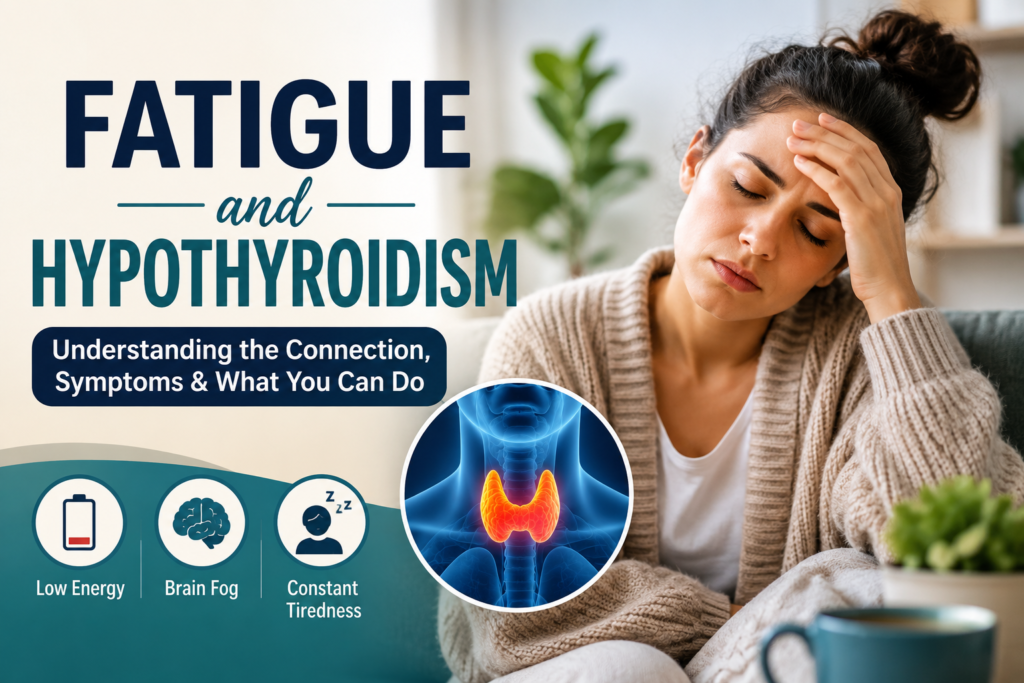
Fatigue and hypothyroidism are closely linked — and for millions of people with an underactive thyroid, exhaustion is the symptom that disrupts daily life most. It is the kind of fatigue that a full night’s sleep cannot fix, that rest does not resolve, and that the people around you may struggle to understand.
If you have hypothyroidism and still feel persistently drained — even on medication — this guide explains exactly why fatigue and hypothyroidism are so deeply connected, what the latest clinical research reveals, and what you can do to reclaim your energy.
What Is Fatigue and Hypothyroidism? Understanding the Connection
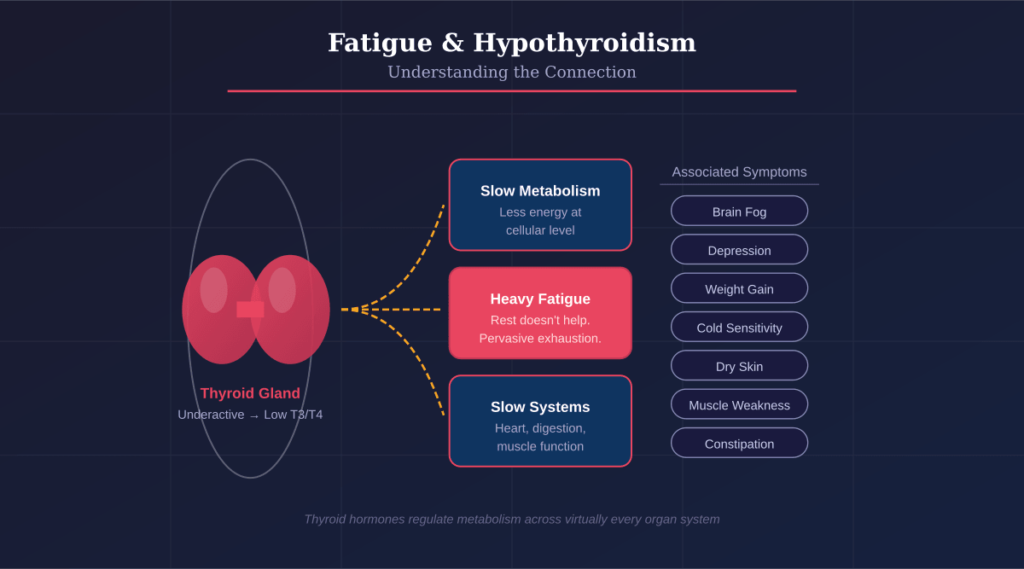
Hypothyroidism occurs when the thyroid gland — a small butterfly-shaped gland at the front of your neck — fails to produce enough thyroid hormone. Because thyroid hormones regulate metabolism across virtually every organ system in the body, even a moderate deficiency triggers a cascade of slowdowns: slower heart rate, slower digestion, slower energy production at the cellular level.
The result is fatigue. Not occasional tiredness, but a heavy, pervasive exhaustion that does not lift after rest.
As one patient quoted by the British Thyroid Foundation described it: “Feeling constantly drained, sometimes to the point where I cannot physically move.” Another person said they used to come home from work and fall asleep almost immediately — every single day.
The distinction between fatigue and ordinary tiredness is important. Tiredness responds to sleep. Fatigue in hypothyroidism does not. According to Medical News Today, hypothyroid fatigue occurs regardless of how much sleep a person gets — a defining clinical feature that separates it from normal exhaustion.
Fatigue and hypothyroidism also rarely travel alone. The exhaustion frequently appears alongside brain fog, depression, cold sensitivity, constipation, weight gain, dry skin, and muscle weakness — a cluster of symptoms that reflect how widely thyroid hormones influence bodily function.
It is also worth noting that an overactive thyroid (hyperthyroidism) can cause fatigue through a different mechanism. Rather than a metabolic slowdown, hyperthyroidism drives the body into overdrive until it burns out — often causing difficulty sleeping, heat sensitivity, and anxiety alongside the exhaustion.
How Common Is Fatigue in Hypothyroidism? What the Research Shows
For years, patients were told that once thyroid hormone levels normalized on medication, fatigue should resolve. The clinical reality has proven far more complicated — and recent research puts hard numbers on just how widespread the problem is.
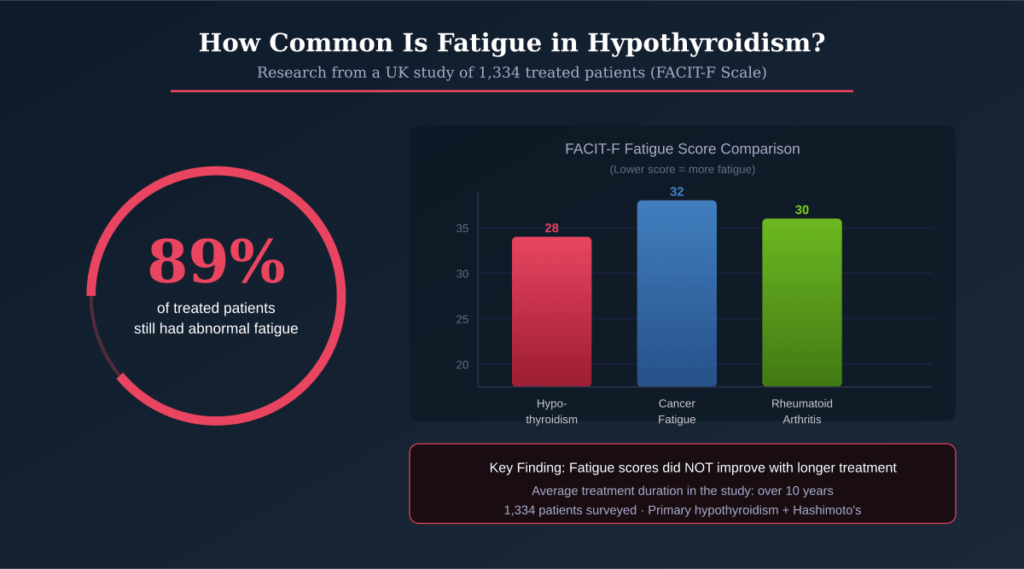
A large-scale UK study published in PMC surveyed 1,334 people with primary hypothyroidism or Hashimoto thyroiditis, all of whom were already taking thyroid hormone replacement therapy. Using the FACIT-F fatigue scale — a validated clinical measurement tool — the findings were striking: 89% of respondents met the criteria for clinically abnormal fatigue, despite being on treatment. The average treatment duration was over ten years, meaning these were not newly diagnosed patients waiting for their medication to work.
Perhaps more significant is how these fatigue scores compared to other serious chronic illnesses. The FACIT-F scores in treated hypothyroid patients were comparable to — or worse than — those recorded for conditions like cancer-related fatigue and rheumatoid arthritis. Fatigue and hypothyroidism, taken together, represent a quality-of-life burden that is routinely underestimated in clinical settings.
The study also found that fatigue scores did not vary significantly by age, gender, treatment type, or duration of treatment. This rules out the idea that fatigue is simply a transitional phase — for a large proportion of patients, it is a persistent, long-term feature of the condition.
Hashimoto thyroiditis, the autoimmune condition responsible for most cases of hypothyroidism in developed countries, has an estimated incidence of 160 to 210 per 100,000 people per year in the UK. In roughly half of those affected, it progresses to full hypothyroidism over approximately 20 years. The scale of the condition, combined with the high rate of persistent fatigue, makes this a major and underrecognized public health issue.
Why Does Fatigue and Hypothyroidism Persist Even on Medication?
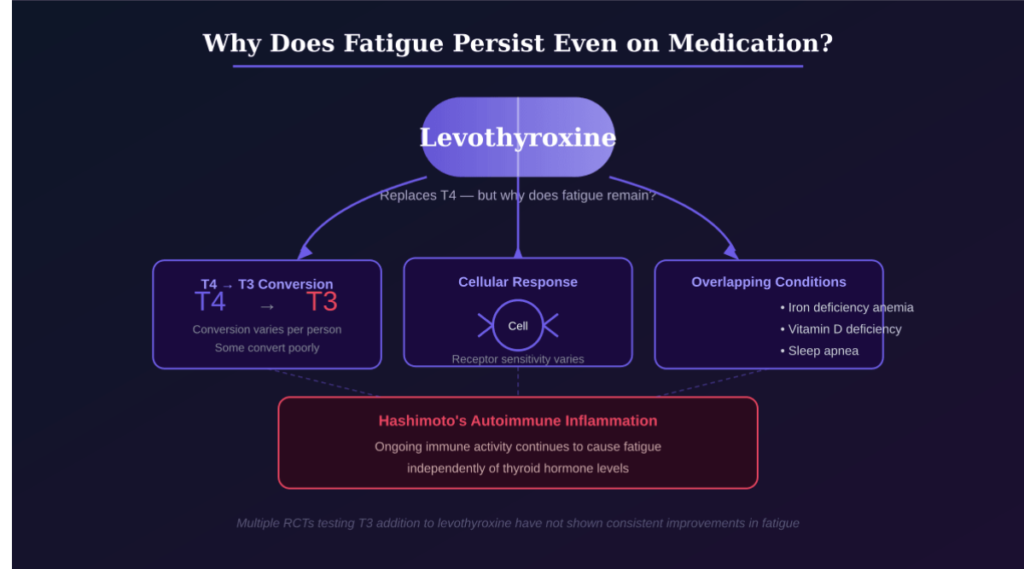
This is the question most patients — and many clinicians — find hardest to answer. If levothyroxine replaces the missing thyroid hormone, why does fatigue so often remain?
The honest answer is that the medical community does not yet have a complete explanation. According to Healthline, persistent symptoms in treated hypothyroidism do not reliably correlate with lower T3 blood levels. Multiple randomized controlled trials testing the addition of T3 to levothyroxine as combination therapy have also largely failed to show consistent improvements in fatigue, cognition, or quality of life.
This points to a more complex picture. Possible contributing factors include individual differences in how the body converts T4 (the storage hormone in levothyroxine) to active T3, variation in how cells respond to thyroid hormones at a tissue level, and the presence of overlapping conditions that drive fatigue independently — such as sleep apnea, iron deficiency anemia, vitamin D deficiency, or ongoing autoimmune inflammation from Hashimoto thyroiditis itself.
Medication optimization remains the essential first step. If fatigue and hypothyroidism persist on treatment, it is worth examining whether medication is being taken correctly before assuming treatment has failed.
Optimizing Levothyroxine to Reduce Hypothyroidism Fatigue
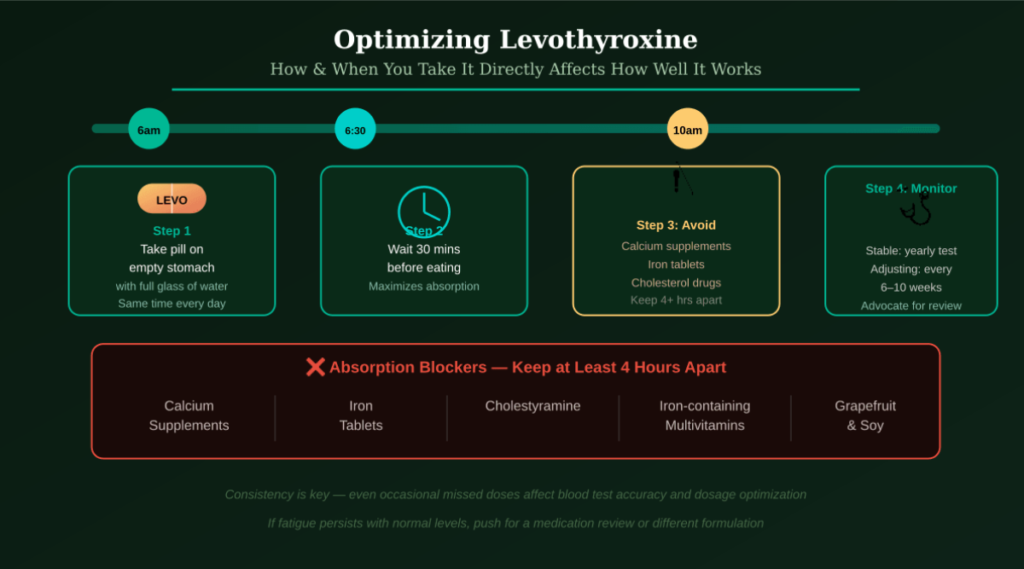
How and when levothyroxine is taken has a direct impact on how well it works — and many patients are unaware of how many factors can undermine absorption.
For best results, take levothyroxine at the same time every day, ideally first thing in the morning on an empty stomach, with a full glass of water. Wait at least 30 minutes before eating. Keep it at least four hours apart from calcium supplements, iron tablets, cholesterol-lowering drugs like cholestyramine, and multivitamins containing iron — all of which significantly reduce absorption. Grapefruit and soy products should also be consumed separately.
Consistency is equally important. Missing doses, even occasionally, affects blood test results and makes it harder for your doctor to find the right dosage. If you miss a dose, take it as soon as you remember.
Thyroid levels should be checked at least once a year if stable, or every 6–10 weeks during early diagnosis or dosage changes. If fatigue and hypothyroidism symptoms persist despite levels appearing normal, push for a medication review — some patients do better on adjusted dosages or different formulations.
Hypothyroidism often begins or is detected through thyroid imaging. If you have had a thyroid ultrasound, understanding your results is worthwhile. Guides to TIRADS 1, TIRADS 2, and TIRADS 3 explain what the different classification levels mean, and this explainer on what TR4 means in a thyroid scan is helpful if that terminology appears in your report.
Diet Strategies for Managing Fatigue and Hypothyroidism
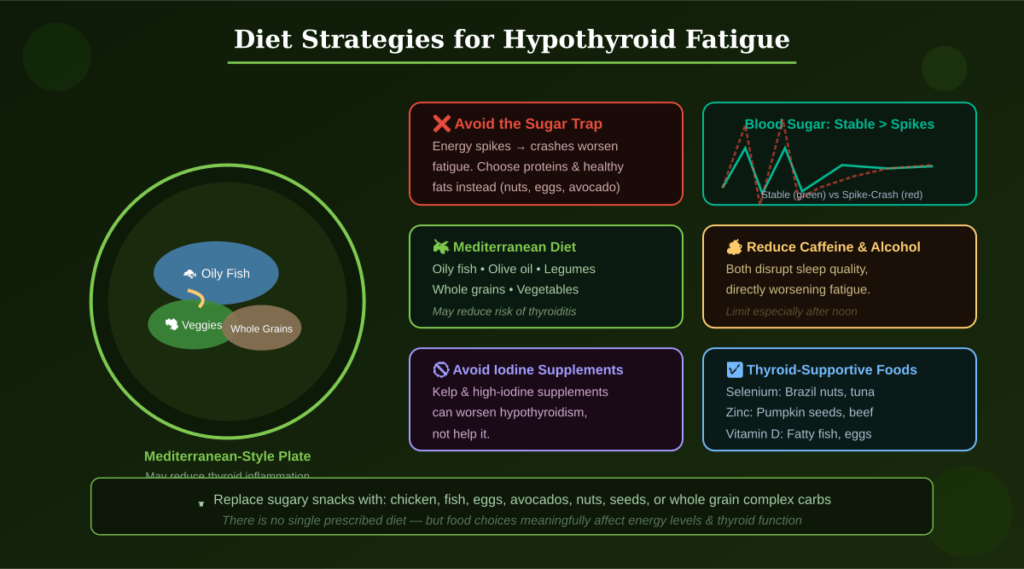
There is no single prescribed diet for fatigue and hypothyroidism, but dietary choices meaningfully affect both energy levels and thyroid function.
Avoid the sugar trap. Exhausted patients are often drawn to sugary snacks for a quick energy lift — but blood sugar spikes are followed by sharp crashes that worsen fatigue. Replacing sweet snacks with stabilizing foods is more effective: lean proteins such as chicken, fish, and eggs; healthy fats from avocados, nuts, and seeds; and complex carbohydrates from whole grains.
Adopt a Mediterranean-style diet. A 2023 expert commentary noted that plant-focused eating patterns, particularly the Mediterranean diet, may reduce the risk of thyroid inflammation (thyroiditis) while supporting overall thyroid health. Key components include oily fish rich in omega-3 fatty acids, whole grains, olive oil, legumes, and vegetables — all foods that support sustained energy.
Reduce caffeine and alcohol. Both disrupt sleep quality, which directly worsens fatigue and hypothyroidism symptoms. Caffeine offers a short-term energy boost followed by a crash, and alcohol fragments sleep architecture. Cutting back — especially in the afternoon and evening — can meaningfully improve how rested you feel.
Avoid iodine supplements and kelp. If you have hypothyroidism, high-iodine supplements can worsen your condition rather than help it. Kelp is sometimes marketed as a thyroid booster because of its naturally high iodine content, but it can aggravate symptoms, including fatigue. For a guide to what thyroid supplements are actually appropriate, see this overview of thyroid support supplements for hyperthyroidism.
Sleep, Exercise, and Lifestyle Adjustments for Hypothyroid Fatigue
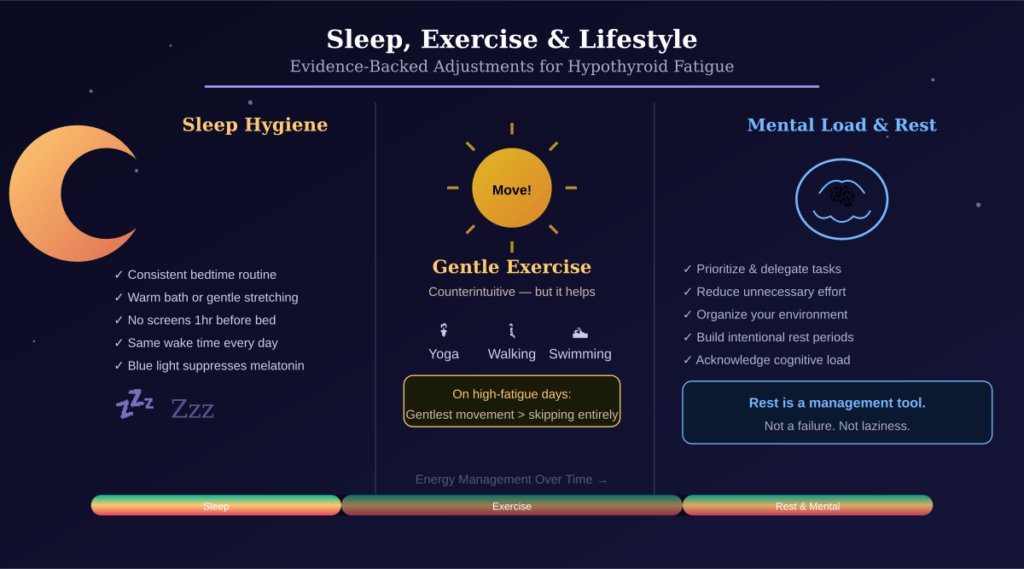
Managing fatigue and hypothyroidism effectively requires more than medication and diet alone. Sleep quality and daily habits play a significant, evidence-backed role.
Prioritize sleep hygiene. Many hypothyroid patients experience the frustrating paradox of feeling exhausted but sleeping poorly. A consistent bedtime routine helps — a warm bath, reading, or gentle stretching signals the body to wind down. Avoiding screens for at least an hour before bed is important; blue light suppresses melatonin and delays sleep onset. Maintaining consistent sleep and wake times, including weekends, reinforces the body’s sleep-wake cycle.
Exercise gently and consistently. It may seem counterintuitive to use energy when you have so little — but regular physical activity genuinely improves energy levels over time by supporting metabolism, cardiovascular health, and mood. This does not require intense exercise. Yoga, walking, swimming, or light stretching are effective options. On high-fatigue days, choose the gentlest form of movement rather than skipping it entirely.
Manage cognitive and emotional load. Fatigue and hypothyroidism have a psychological dimension that is easily underestimated. Brain fog, depression, and the mental weight of managing a chronic condition compound physical exhaustion. Prioritizing tasks, delegating where possible, and organizing your environment to reduce unnecessary effort are all legitimate and effective strategies — not signs of weakness.
Build rest into your day deliberately. Rest is a management tool, not a failure. Intentional rest periods — not just nighttime sleep — help stabilize energy across the day. With some trial and error, most patients can identify the rest patterns that work best for their individual rhythms.
When Fatigue and Hypothyroidism Have Other Contributing Causes
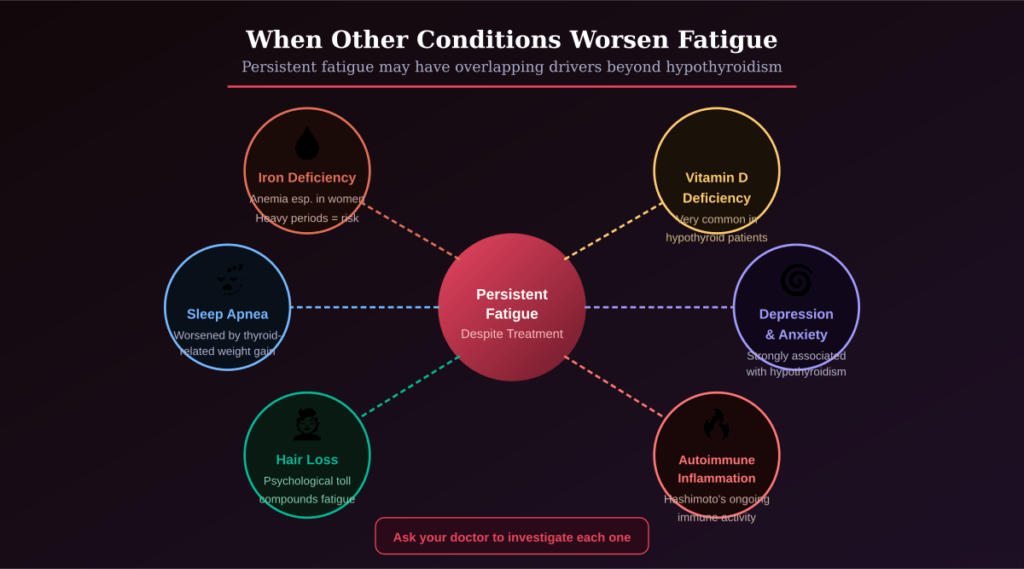
Persistent fatigue in hypothyroidism is sometimes driven — or worsened — by overlapping conditions that deserve their own investigation. Common culprits include iron deficiency anemia, which is particularly prevalent in women who experience heavy menstrual periods (itself a symptom of hypothyroidism), vitamin D deficiency, sleep apnea worsened by thyroid-related weight gain, and depression or anxiety, both of which are strongly associated with hypothyroidism and independently sustain fatigue.
Hair loss is another symptom closely tied to thyroid disease that can compound the psychological toll of fatigue and hypothyroidism — the visible impact of the condition adds emotional distress that further depletes energy reserves. This guide to thyroid disorder and hair loss covers the connection in detail.
If fatigue remains severe despite optimizing thyroid treatment, ask your doctor to investigate these possibilities specifically. Addressing a secondary cause can make a dramatic difference even when thyroid levels appear well-controlled.
Fatigue and Hypothyroidism: Key Takeaways
Fatigue and hypothyroidism are among the most common and most disruptive pairings in chronic disease — and the research confirms that treatment alone does not resolve it for the majority of patients. The FACIT-F study showing 89% of treated patients still meet criteria for abnormal fatigue is a landmark finding that reframes what patients and clinicians should expect.
Managing fatigue and hypothyroidism well requires a multi-pronged approach: optimizing medication timing and dosage, eating to stabilize blood sugar and support thyroid function, improving sleep quality, incorporating gentle regular movement, addressing overlapping conditions, and building intentional rest into daily life.
If your fatigue persists despite doing everything right, the evidence supports continuing to advocate for better care. This is not a failure of effort — it is an underserved clinical need that deserves greater attention, more research, and more support.
Always consult a qualified healthcare professional before making changes to your medication or supplement regimen. This article is for informational purposes only and does not constitute medical advice.
References
- Idrees, T., Onyekachi, V., Taylor, P., et al. (2025). Fatigue in treated hypothyroidism: findings from a large UK patient survey using the FACIT-F scale. PubMed Central (PMC). https://pmc.ncbi.nlm.nih.gov/articles/PMC12084796/.
- British Thyroid Foundation. (2024). Coping with fatigue. BTF Patient Information. https://www.btf-thyroid.org/coping-with-fatigue.
- Leonard, J. (2025, May 2). 12 signs and symptoms of hypothyroidism (underactive thyroid). Medical News Today. https://www.medicalnewstoday.com/articles/324535.
- Cherney, K. (2024, June 21). Does hypothyroidism cause chronic fatigue? Healthline. https://www.healthline.com/health/chronic-fatigue-and-hypothyroidism.